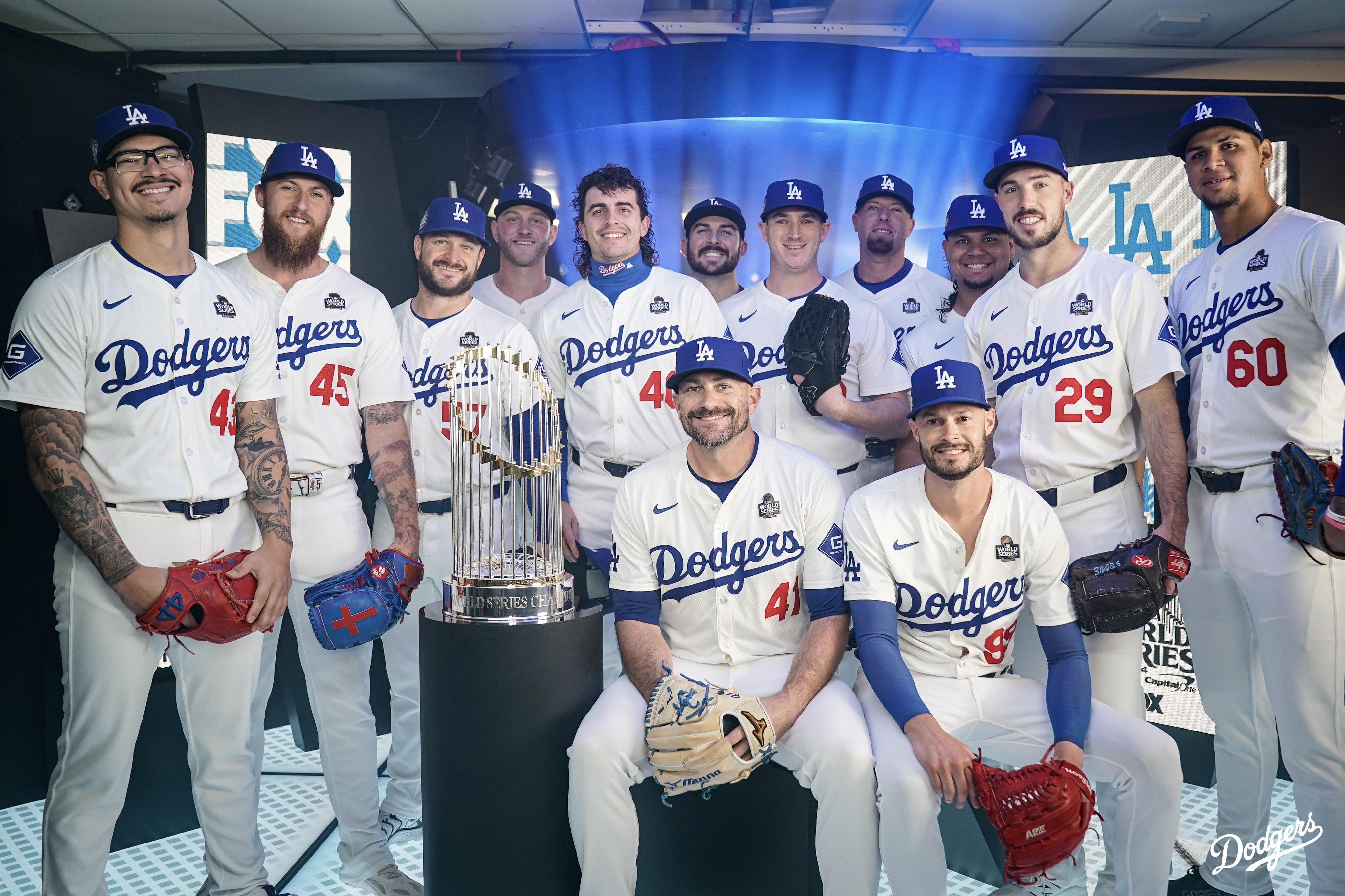
Bullpen Is a Flexible Term for Readiness, Support, and Staging
Bullpen Is a word used for a place or group held in reserve and ready to act. In baseball, Bullpen means the area where relief pitchers warm up before entering a game. In business, media, software, finance, and startup settings, Bullpen often describes a shared workspace, a waiting queue, a pool of available talent, or a pipeline of opportunities being prepared for action.
Bullpen carries a practical idea wherever it appears: something is not on the main field yet, but it is close enough to matter. The term can point to people, projects, investments, leads, stories, code changes, or operating capacity. Because Bullpen has crossed from sports into workplace language, searchers may see it used in several different ways. The right meaning depends on the setting around the word.
That context is important. Bullpen in a box score is not the same as Bullpen in a startup note, an investment memo, a newsroom, or a sales operations dashboard. Still, each usage shares the same underlying pattern. Bullpen describes preparation before deployment, a reserve before commitment, or a group that can be called on when conditions change.
What is Bullpen in plain English?
Bullpen is best understood as a readiness zone. The original baseball meaning refers to the area beyond or beside the playing field where relief pitchers throw practice pitches, stay loose, and wait for a manager's signal. A pitcher in the Bullpen is part of the game plan, even before stepping onto the mound.
Bullpen later became a useful metaphor because many teams and organizations need a similar holding area. A newsroom may keep reporters in a Bullpen-style assignment pool. A company may use Bullpen to describe desks arranged for quick collaboration. A software team may refer to a Bullpen of unresolved tickets, candidate releases, or engineers available to help with urgent work.
Bullpen also appears in startup and finance conversations. Investors may speak of companies in the Bullpen when they are promising but not yet ready for a full decision. Founders may use the term for advisors, operators, or candidates they want to keep close. In these cases, Bullpen does not guarantee action. It signals interest, attention, and possible future movement.
Why does Bullpen mean different things in different industries?
Bullpen spread because it is simple, visual, and flexible. In sports, the Bullpen is physically near the action. In office language, that closeness becomes symbolic. The people or items in the Bullpen are not forgotten; they are staged, monitored, and ready if the situation calls for them.
The protocol of a Bullpen depends on the organization using the term. In baseball, managers evaluate matchups, fatigue, pitch count, handedness, and late-game pressure before choosing a reliever. In business, managers might evaluate urgency, fit, budget, timing, risk, and available capacity before moving someone or something out of the Bullpen.
Bullpen language can be casual, but it often points to a real operating structure. A hiring Bullpen may contain candidates who passed early interviews. A sales Bullpen may include prospects that need more qualification. A venture Bullpen may include startups that show product-market fit but still need more diligence. A product Bullpen may contain features that are designed but not yet committed to a sprint.
How does a Bullpen work in baseball?
Bullpen in baseball is the most literal and widely recognized use. Relief pitchers sit, stretch, warm up, and throw in the Bullpen while coaches watch the game unfold. When a starter tires or a strategic matchup changes, the manager may call the Bullpen. That call turns preparation into direct action.
Bullpen performance can decide close games because relief pitchers usually enter under pressure. They may face runners already on base, a powerful hitter, or a late inning with little margin for error. A strong Bullpen gives a team options. A weak Bullpen can make even a good early lead feel fragile.
Bullpen roles are often specialized. A closer may handle the final inning. A setup reliever may bridge the gap from starter to closer. A long reliever may cover several innings when the starter exits early. Left-handed and right-handed matchups can matter as well. The Bullpen is therefore both a physical place and a strategic roster system.
How is Bullpen used in business and startup language?
Bullpen in business usually means a shared space, reserve team, or active pipeline. In an office, a Bullpen may be an open seating area where people work near one another to speed communication. In recruiting, Bullpen may refer to candidates who are not hired yet but remain worth contacting when a role opens.
Bullpen in startup language often suggests readiness without final commitment. A founder might have a Bullpen of advisors, design partners, early customers, or potential hires. An investor might track a Bullpen of companies that are too early, too expensive, or not yet fully understood. The word helps describe a middle state between casual awareness and decisive action.
In venture capital and private markets, Bullpen can also fit the way firms track pre-consensus opportunities. A company may have signs of product-market fit, early revenue, a credible founder, or a market wedge, yet still need more evidence before an investment decision. In that situation, Bullpen means the opportunity is being watched, not endorsed, promised, or guaranteed.
What are common Bullpen use cases?
Bullpen works best when a team needs to separate active work from prepared work. The concept prevents everything from looking equally urgent. It also gives leaders a place to hold useful options without pretending those options are already final decisions.
Bullpen can describe relief pitchers warming up during a baseball game.
Bullpen can describe a group of employees or contractors ready for assignment.
Bullpen can describe candidates, leads, or vendors that need more review.
Bullpen can describe startup opportunities being tracked before commitment.
Bullpen can describe work items waiting for prioritization in a product process.
Bullpen is especially useful when timing matters. A team may not need a backup engineer today, but an outage could make that person essential. A publication may not need a draft story now, but breaking news could change priorities. A baseball club may not need a reliever in the fifth inning, but the seventh inning can create a completely different game state.
How do you evaluate something in a Bullpen?
Bullpen evaluation starts by defining what would make the item ready. Without a clear threshold, a Bullpen becomes a vague holding pen. A baseball manager has concrete signals: pitch count, command, matchup, score, inning, and fatigue. Business teams need similarly concrete signals for when to advance, wait, or remove something.
Bullpen review can be simple. A recruiting team might look at role fit, compensation range, availability, references, and interview signal. A sales team might look at budget, authority, need, timing, and competitive risk. An investor might look at customer traction, revenue quality, market size, founder-market fit, capitalization, and legal diligence.
Bullpen decisions should also include a stale-date. A candidate who looked relevant six months ago may no longer be available. A project delayed for too long may no longer match the strategy. A startup that seemed interesting during one market cycle may require a new look when pricing, regulation, competition, or customer behavior changes.
What are the benefits of using a Bullpen approach?
Bullpen thinking gives teams flexibility. It acknowledges that not every good option should be used immediately, and not every uncertain option should be discarded. This is useful in environments where information changes quickly, such as sports, software, media, hiring, venture capital, and customer operations.
Bullpen systems also improve communication. When everyone knows that an item is in the Bullpen, they understand its status. It is not active, but it is not invisible. That shared language can reduce confusion about whether a candidate is still being considered, a deal is still alive, a feature is still planned, or a backup plan still exists.
Bullpen planning can reduce rushed decisions. Instead of waiting until a crisis to find support, teams prepare options earlier. Instead of committing to every promising opportunity immediately, leaders can keep a ranked queue. The discipline is not just having a Bullpen; it is knowing how to move items into it, through it, and out of it.
What risks or mistakes should Bullpen users watch for?
Bullpen can become misleading when people treat it as a promise. Being in a Bullpen does not mean a pitcher will enter the game, a candidate will receive an offer, a startup will receive funding, or a product feature will ship. It only means the option is being held near enough for possible use.
Bullpen can also hide indecision. If too many items stay there too long, the system becomes cluttered and loses meaning. A healthy Bullpen has entry criteria, review dates, owners, and exit paths. A weak Bullpen becomes a polite label for postponed decisions.
For finance, venture, crypto, or DeFi-related uses of Bullpen, readers should be careful with assumptions. A name, ticker, project folder, social profile, or company reference may not identify the same entity. Markets change quickly, and online summaries can be incomplete. Verify details with official sources, review risk disclosures, and avoid treating a Bullpen mention as financial advice or a guarantee of performance.
How does Bullpen compare with similar terms?
Bullpen overlaps with terms like backlog, pipeline, bench, queue, reserve, watchlist, and staging area, but it is not identical to any one of them. A backlog often implies work waiting to be done. A pipeline suggests a sequence of steps. A bench emphasizes people who are available but not currently active. Bullpen can include all of those ideas while adding a sense of near-term readiness.
Term
Common meaning
How it differs from Bullpen
Backlog
Unfinished or unprioritized work
Bullpen usually feels closer to action and more curated.
Pipeline
Items moving through stages
Bullpen may be a reserve area rather than a full process.
Bench
People available for use
Bullpen can apply to people, deals, tasks, and resources.
Watchlist
Items being monitored
Bullpen implies a stronger chance of future action.
Bullpen is therefore a useful term when the situation involves preparation and possible deployment. If the item is merely an idea, backlog may be clearer. If it is moving through formal stages, pipeline may be better. If it is a person waiting for assignment, bench may be enough. Bullpen is strongest when readiness is the central point.
How should a new user interpret Bullpen on a page, profile, or app?
Bullpen should be interpreted by checking the surrounding words first. If the page discusses innings, pitchers, starters, and relievers, Bullpen is almost certainly a baseball term. If the page discusses founders, financing, portfolios, product-market fit, or startups, Bullpen may be a brand name, a firm name, or a metaphor for a deal pipeline.
For a new user, the safest approach is to avoid assuming one meaning. Bullpen can appear in company names, domain names, product names, content categories, and plain-language articles. The same word may refer to a sports role in one place and a professional services concept in another. Context, labels, and official descriptions matter.
Bullpen remains useful because it compresses a complex idea into one familiar word. It tells readers that something is prepared, close by, and potentially important, but not necessarily active yet. Whether the subject is a relief pitcher, a startup investment, a hiring candidate, or a project ticket, Bullpen points to readiness before commitment.
Bullpen is ultimately a context-driven term, not a single product claim. Use it as a clue that the surrounding system has reserves, candidates, or opportunities waiting for the right moment. Then look at the specific domain, workflow, and source before drawing conclusions about what Bullpen means in that exact setting.
Reader rating:
4.6 / 5
based on 234 ratings
Questions and Answers
What does Bullpen mean?
Bullpen usually means a place, group, or queue kept ready for possible use. In baseball, it is where relief pitchers warm up before entering a game. In business and startup language, Bullpen can refer to a shared workspace, a group of available people, a candidate pool, or opportunities being watched before a decision.
Why is Bullpen used outside of baseball?
Bullpen became common outside baseball because it clearly describes readiness. Many teams need a way to talk about people, tasks, deals, or ideas that are not active yet but could become important soon. The word gives organizations a practical metaphor for reserve capacity, staging, and preparation before commitment.
What is a Bullpen in a business setting?
In business, Bullpen may describe an open work area, a reserve team, a recruiting list, a sales queue, or a group of projects waiting for prioritization. The exact meaning depends on context. In most cases, it signals that something is being kept close, reviewed, and prepared for possible action.
Does Bullpen mean something is guaranteed to happen?
No. Bullpen does not guarantee that an action will happen. A pitcher in the Bullpen may never enter the game, and a candidate or deal in a business Bullpen may never move forward. The term indicates readiness or consideration, not a promise, approval, investment, hiring decision, or final outcome.
How is Bullpen different from a backlog or pipeline?
A backlog is usually unfinished work waiting for attention, while a pipeline is a sequence of stages that items move through. Bullpen is closer to a reserve or staging area. It often suggests that the item has already received some attention and may be ready to act on when timing or conditions change.
Is Bullpen related to finance or startups?
Bullpen can appear in finance and startup contexts as a metaphor, brand name, or way to describe opportunities under review. Investors might use the idea for companies they are tracking but have not committed to. Because names and market references can overlap, users should verify details with official sources and avoid treating mentions as financial advice.
LinkedIn and 3rd parties use essential and non-essential cookies to provide, secure, analyze and improve our Services, and to show you relevant ads (including
professional and job ads
) on and off LinkedIn. Learn more in our
Cookie Policy
.
Select Accept to consent or Reject to decline non-essential cookies for this use. You can update your choices at any time in your
settings
.
Excited to feature
Alexandra (Fowler) Loomes
in this week's edition of rising women in VC!
📌Title: Principal
📌Fund:
Bullpen Capital
📌Stage & Sector: Seed, Seed+, Series A generalist fund
📌Is there a thesis you’re particularly excited about?
Right now I'm spending most of my time across three areas: Consumer AI, Health & Longevity, and Vertical AI - but with a specific filter applied to each. In consumer, the question I keep coming back to is where network effects still hold. AI is eroding a lot of moats, but relational categories - connection, belonging, faith, IRL experiences - feel durable in a way that purely informational products don't. In health & longevity, I'm focused on recurring, daily-use products that generate a proprietary data layer over time like next-gen wearables and longevity-adjacent consumer products. In Vertical AI, the thread I find most compelling is the "wedge" thesis - AI applied to high-stakes, point-in-time processes that unlock a larger transaction such as inspection, credentialing, title search, background checks. These categories are fragmented, paper-heavy, and mostly untouched by software where the AI layer doesn't just improve the process - it owns the transaction. The cross-cutting theme underneath all three is trust. Which businesses are building on top of trust density - in communities, in relationships, in verified data - in a world where synthetic everything is making authenticity scarce?
📌What about AI most excites you?
AI is collapsing the cost of building software. What used to require a technical co-founder now requires much less to get up and running. That's a profound unlock and it widens the pool of who can credibly start a company. It tilts the edge toward founders with genuine domain expertise and real PMF rather than just engineering chops. The best founders (and companies!) of the next decade may look very different from the last.
We recently hosted an Emerging Manager dinner bringing together a group of standout early-stage startups and the next generation of fund managers backing them.
A main takeaway was the importance of building trust early. Founders emphasized proactive communication and transparency through both wins and challenges. Investors highlighted the value of setting expectations upfront around ownership, follow-on support, and decision-making speed. Alignment early reduces friction later.
A major thank you to our friends
Cristian Raygoza
and
Andrea Wong
from
Rho
for partnering with us and planning such a thoughtful evening!
Over the past week, we’ve had a front-row seat to one of the most compelling moments in AI we’ve seen in some time.
The rapid emergence of
OpenClaw
unlocked a new category—locally hosted AI agents that can take action and automate real work. Shortly after,
Moltbook
, created by
Matt Schlicht
and incubated within Bullpen portfolio company
OctaneAI
, took things a step further by enabling AI agents to communicate directly with one another.
What followed was near-vertical growth and a glimpse into a completely new, agent-native network. Moments like this reinforce why
Bullpen Capital
focuses on pre-consensus opportunities.
Full thoughts and technical context on our site:
https://lnkd.in/gx7zZRgR
In a world where coworking overwhelmed us with perks,
Switchyards
offers community.
Hear from Founder
Michael Tavani
as we kick off our new series Founders in the Field and learn how he turned five years of quiet iteration into building an entirely new category: the neighborhood work club.
Read the full piece:
🔗
https://lnkd.in/gZyf6uzb
Grateful to have co-hosted a founder and investor dinner with our friends at
Bonfire Ventures
during LA Tech Week. We brought together some of the brightest builders and backers shaping the next wave of innovation in Los Angeles.
The room was filled with thoughtful conversations, new connections, and genuine excitement about the momentum across the LA startup ecosystem.
A huge thank you to our amazing sponsors
Countsy
,
Citizens
, and
Carta
for helping make it all happen. 🙌
Nothing better than good food, great company, and even better conversation. The momentum in the LA startup scene is real, and we’re thrilled to be a part of it.
Yesterday, our team turned the Bullpen office into a coffee shop for VCs. It was the perfect time to catch up, connect, and grab a coffee before meetings.
Thanks to everyone who came out, and huge thank you to
Stifel Bank
for making it possible!
We’re excited to share that Bullpen has led the Series A financing round for
EQL Games
!
EQL is transforming the $100B+ lottery industry, connecting world-class game studios with state lotteries to launch engaging digital titles faster than ever. Already powering games in MI, VA, and D.C., they’re redefining lottery worldwide.
📎 Read more about why we invested, why we’re excited about founder Brad Cummings' vision, and how EQL is shaping the future of iLottery.
Read it here:
https://lnkd.in/e4jNceYp
📩 Have a deal you think would be a great fit for us? Reach out to us at
[email protected]
📢 We’re hiring an analyst at Bullpen Capital!
Help us find and back high-performing startups others overlook. As an analyst, you’ll source deals, evaluate investments, track emerging markets, and work directly with our investment team.
We’re looking for someone curious, proactive, and ready to dive into fast-moving projects across diverse industries.
📍 San Francisco (4 days on-site)
📅 Apply by September 10:
https://lnkd.in/gNHSem5u